
Impact Assessment of Helsinki Biennial 2025: New Audiences and Improvements to the Visitor Experience
A comprehensive impact assessment of the Helsinki Biennial has been published, concluding that the 2025 event succeeded in its objectives of reaching broader and more satisfied audiences than previously. The assessment also highlights the event’s significance in strengthening Helsinki’s international reputation and revitalizing the urban landscape.
In 2025, the Helsinki Biennial aimed specifically to expand its audience and raise awareness of the event, thereby strengthening Helsinki’s appeal and vitality. The impact assessment focused specifically on these objectives.
Helsinki Biennial is an international contemporary art event produced by HAM Helsinki Art Museum. The Biennial was held for the third time from 8 June to 21 September 2025. Over the summer and early autumn, the Biennial reached a total of 568,000 people across three venues: Vallisaari, Esplanade Park, and HAM.
The Biennial is produced in close cooperation with the City of Helsinki, the event’s main funder. This collaboration supports the City’s strategy —particularly the development of maritime Helsinki—as well as its goals for cultural and sustainable urban development. HAM is a subsidiary foundation of the City of Helsinki.
The impact assessment, carried out by Demos Helsinki, presents the key results of Helsinki Biennial 2025, evaluated impacts of the exhibition event, and recommendations for developing the Biennial. The assessment was based on background materials collected by HAM Helsinki Art Museum, such as visitor and artist feedback. The findings were further refined through interviews with the event’s key partners.
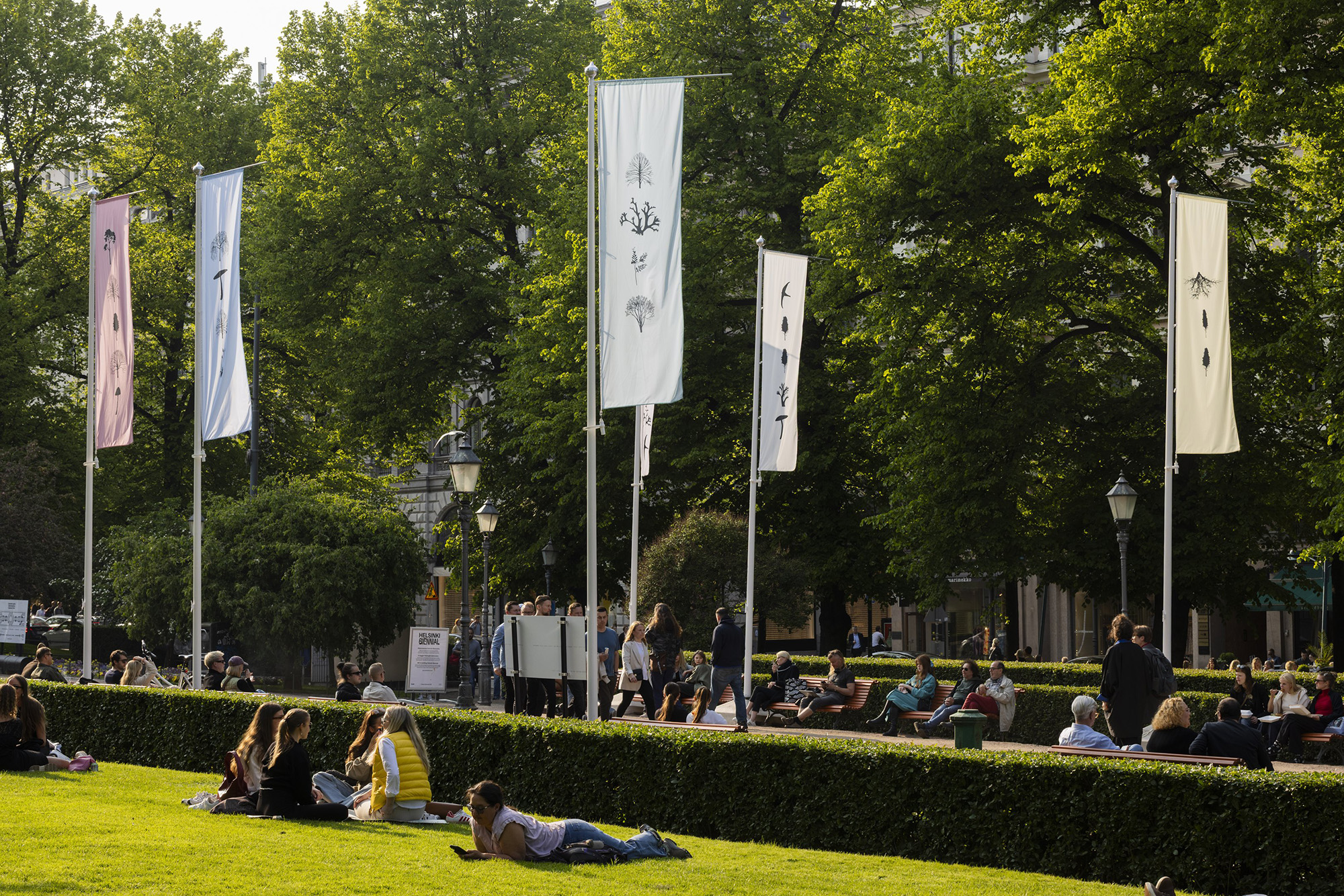
Katie Holten: Learning To Be Better Lovers (Forest Alphabet), 2025, detail. Helsinki Biennial 8.6.–21.9.2025, Esplanade Park. Photo: HAM / Helsinki Biennial / Henni Hyvärinen
The visitor experience improved significantly
The impact assessment concludes that the 2025 Biennial succeeded in its goal of reaching broader and more satisfied audiences than previously.
Over 113,000 visitors visited Vallisaari, and nearly 46,000 visited HAM Helsinki Art Museum. The Esplanade installations, in turn, brought art into the heart of the city—along the routes of passersby, into the rhythm of summer days, and easily accessible to tourists. An estimated 409,000 people experienced art at Esplanade park during the summer.
In addition to the Biennial’s own actions, audience expansion was supported by three free-entry days enabled by the City of Helsinki and school visits involving approximately 8,000 pupils from across Helsinki. These initiatives brought to life the promise promise of a contemporary arts event shared by all city residents.
Based on a visitor survey conducted by the Helsinki Biennial, it can be concluded that the visitor experience improved significantly compared to 2023. The event’s NPS score—reflecting visitors’ willingness to recommend the event—rose from -1 to +50. In addition, 58% felt the event exceeded expectations (2023: 30%).
Of respondents, 52% visited the Biennial for the first time, and Vallisaari’s visitor numbers returned close to the 2021 level. The number of first-time visitors to Vallisaari increased by 27,456 (+88%) compared to 2023.
A connection with nature also features strongly in visitors’ motivations: nearly half of all visitors (47%) cited the opportunity to experience art close to nature as a reason for attending, rising to over 60% among visitors to Vallisaari.
The visitor experience was also influenced by the fact that in 2025, the ferry ticket price was negotiated to 50% lower than in 2023, bringing the round-trip fare down to EUR 10. The City’s support and involvement had a significant impact in negotiations with Metsähallitus. Open-ended visitor responses show that the lower ticket price was noticed and influenced the decision to visit the island.
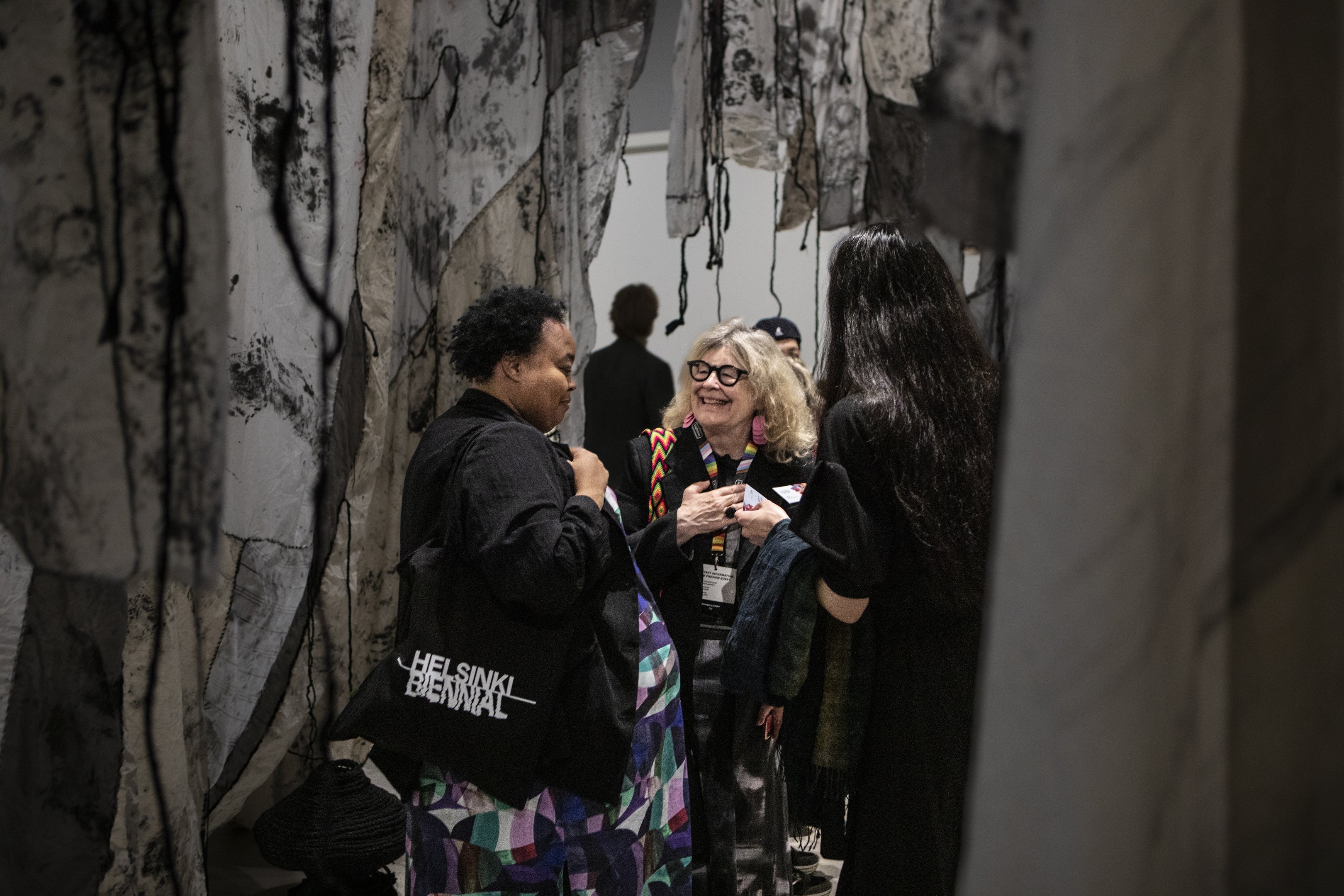
The Helsinki Biennial Preview Days brought together 850 visual arts professionals from Finland and around the world. Photo: HAM / Helsinki Biennial / Maija Toivanen
The Biennial raised Helsinki’s profile as an international city of visual arts
In 2025, the Professional Preview Days—organized for the first time in cooperation with Frame and contemporary arts partners in the Helsinki region—reached a larger-than-expected group of contemporary arts professionals and practitioners (850 participants, about 1,100 accredited). About half of those accredited came from outside Finland. Participants included museum professionals, producers, curators, collectors, and artists.
Bringing international guests to Helsinki through the Preview Days was seen as a key success. Preview Days partners and interviewees assessed that the event increased Helsinki’s recognition as an international city of visual arts.
Communications and marketing also played a part in strengthening Helsinki’s appeal as a destination for tourism and the visual arts. Helsinki Biennial reached around 170 journalists in total; 90 visited the venues in person and 80 participated in other events.
Across 800+ domestic and international media hits about Helsinki Biennial, emphasis was placed on the distinctive combination of nature and art, the event’s visible work to advance environmental responsibility in Vallisaari, and its connection to the City of Helsinki.
Among partners, 80% agreed or strongly agreed with the statement that Helsinki’s recognition as an international visual arts city increased as a result of the event.
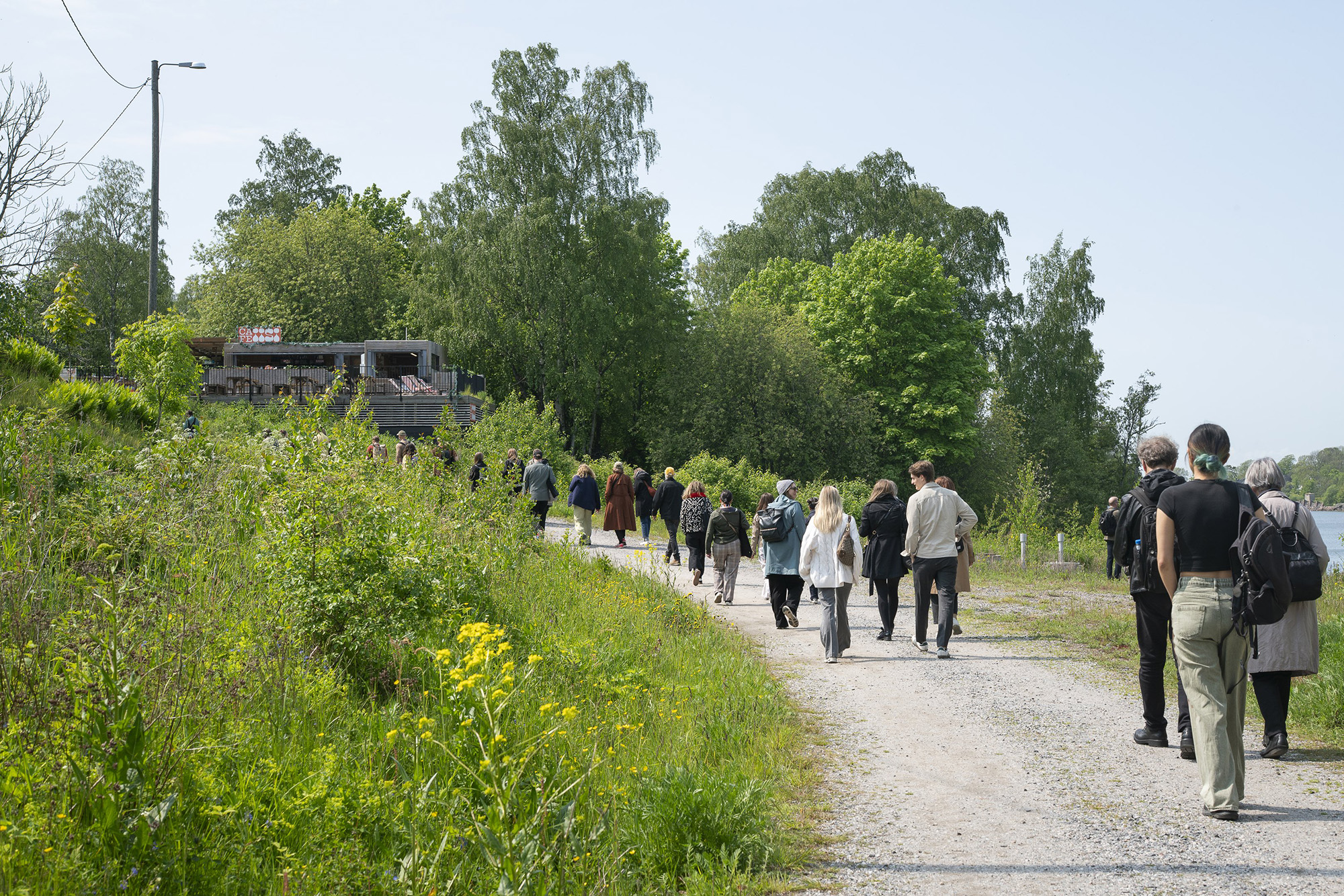
The Helsinki Biennial plays an important role in supporting business activities on Vallisaari. Photo: HAM / Helsinki Biennial / Sonja Hyytiäinen
Employment and Professional Opportunities
The Biennial’s impacts on vitality arise both from organising the event and from visitor spending. The employment impact of organising the event totalled approximately 53 FTE-years, making the Biennial a significant employer in the cultural sector. Vitality impacts are also visible in the private sector through visitor consumption. Based on the visitor survey, visitors spent an average of approximately EUR 72 in connection with their Helsinki Biennial visit. Spending was directed to accommodation, shopping, restaurant and café services, and local transportation.
More than 80% of respondents to the Helsinki Biennial artist survey assessed that participation creates new opportunities and has a positive effect on international career development. However, the impacts are uncertain. The direct employment effect of artist commissions and fees is estimated at five person-years.
The Biennial also supports the vitality of the city centre and helps lay the foundation for economic activity in Vallisaari Island. Interviews and other data suggest that the Esplanade installations strengthened the city centre’s vibrancy by bringing art to the heart of the city centre. The park was also seen as an important link between HAM and Vallisaari in shaping the overall visitor experience. Vallisaari, in turn, supports the objective of enlivening quieter destinations: Biennial summers bring many people to the island who would not otherwise visit.
On Vallisaari, the Biennial acts as an economic engine, supporting the Maritime Helsinki strategy’s aim of creating the conditions for livelihoods and business activity in the archipelago. Interviews also highlighted a long-term ambition to increase visitor numbers to enhance vitality impacts, while carefully considering the island’s ecological carrying capacity and the capacity of local services.
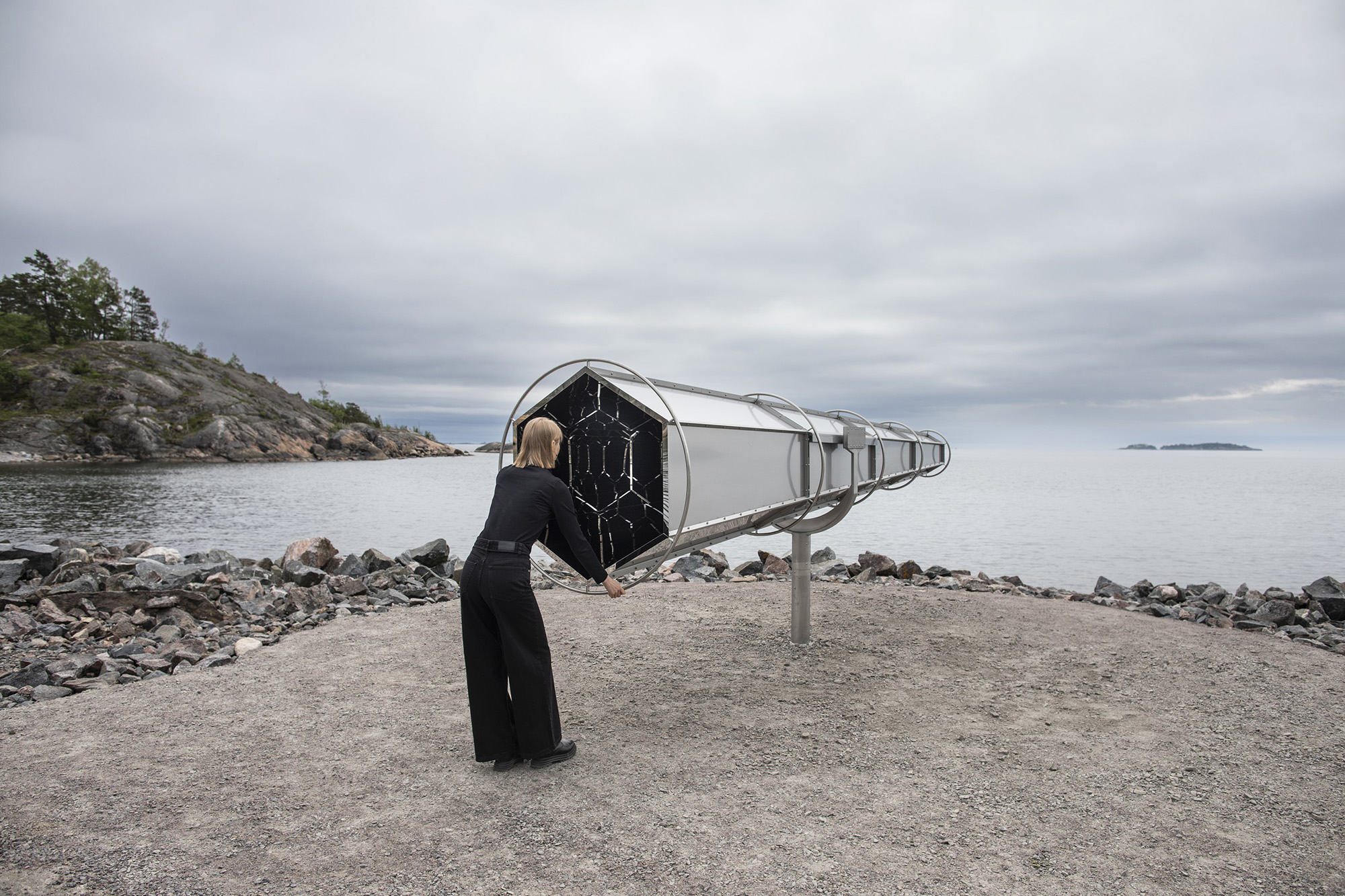
Olafur Eliasson: Viewing machine, 2001/2003. Helsinki Biennial 8.6.–21.9.2025, Vallisaari Island. © 2001/2003 Olafur Eliasson. Photo: HAM / Helsinki Biennial / Maija Toivanen
Looking Ahead to Future Biennials
Based on the impact assessment, the 2025 Helsinki Biennial was, overall, a great success. While there is still room for improvement, the event’s foundation is strong: what makes the Biennial distinctive—the dialogue between nature and art—is recognised and appreciated.
In the coming years, the Helsinki Biennial will be developed with a focus on, among other things, the visibility of art and collaboration with stakeholders. Special attention will also be paid to improving the visitor experience and making the event more accessible to visitors than before.
In addition, the goal is to strengthen cooperation with service providers on Vallisaari Island and Helsinki tourism services, as well as to examine the event’s responsibility from the perspective of the accessibility of ferry tickets, for example.
The next Helsinki Biennial will take place from June 6 to September 19, 2027.
Read the full impact assessment here:
Main image: Sara Bjarland: Stranding, 2025. Helsinki Biennial 8.6.–21.9.2025, Vallisaari Island. Photo: HAM / Helsinki Biennial / Sonja Hyytiäinen